 |
|
Carp in natural ponds, lakes and rivers enjoy a self renewing supply of aquatic insects, crustaceans and plant matter, which they get by grubbing through the silt. If there is not enought to go round, the fish do not starve, but instead of achieving their full growth potential, they remain stunted. On the other hand, a koi pond is a densely stocked, closed environment in which natural rules do not apply. The fish are dependent on their keeper for everything , including their food.
The Koi diet
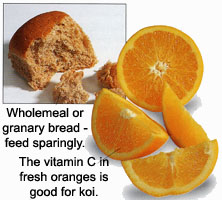
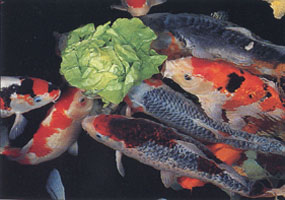
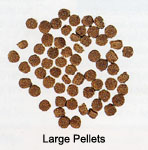
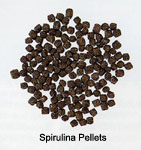
Nowadays the trend has swung away from what the hobbyist could find in the grocery store or dig from the garden towards a heady selection of ready prepared koi foods in flake, pelleted or extruded, pondstick formulae. While these are excellent, other foods given as treats to vary the monotony still have their place. Wholemeal bread in moderation, whole lettuce, oranges cut in half so that the koi can suck out the flesh, earthworms from chemical free soil and even prawns in the shells definitely give the fish extra zest.
 |
 |
Avoid foods high in moisture and carbohydrate, such as peas, potatoes and sweetcorn. Twenty years ago these were kio staples, but only because nothing better was available. Also off the list are meat and dairy products, as these contain solid fats.
Koi do not have stomachs; digestion takes place in the long gut and the more food that is offered at a sitting the smaller the percentage assimilated. This is especially so at low temperatures. The remaining food is passed, partially digested through the digestive system to place an unwanted loading on the biofilter. Some of the least digestible ingredients in commercial foods happen to be cheap: carbohydrate accounts for between 30 and 40 percent by weight of a typical koi pellet and also acts as a binding and bulking agent.
This partially explains the great difference in price between similar looking koi foods. High protein formulae are more likely to contain fish meal, which provides desirable unsaturated lipids (oils). Other ingredients common to most foods are ash (a source of minerals), fiber (of doubtful value to koi), moisture and vitaimins. Also present may be immune stimulants, probiotics (ingredients to pre-empt problems by nutritional rather than chemical means), color enhancers and various exotic additives, such as crushed crab and lobster shells, propolis also now as 'bee glue' and powdered montmorillonite clay. In a crowded marketplace manufacturers are keen to gain the edge with innovative ingredients. The latest trend is towards paste foods in powder form, which can be mixed to a loose dough with water or fresh orange juice.
 |
 |
 |
 |
 |
How and when to feed koi
Wild carp are constant browsers but koi typically have to fit in with our busy work schedules and share our mealtime two or three times a day. However, this gorge and starve regime does not promote the best growth rate. Invest in an auto-feeder and the koi will come closer to nature with several smaller meals over a 24 hour period.
In unheated ponds, what and how much you feed koi is temperature dependent. Start in spring, when the water reaches 50 degrees plus with small amounts of easily digestible, sinking wheatgerm pellets. As the water warms further, move to higher protein floating foods and then when the pond begins to cool down again in autumn, revert to wheatgerm before ceasing feeding altogether. By then the fishes metabolism will have slowed and they will use their stored energy reserves through the winter. In heated ponds, koi can be grown on more quickly with no checks as they can be fed right through the year.
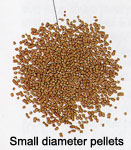
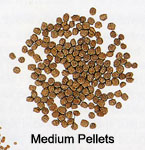
Few people bother to measure how much food they give their koi; the recommended amount is between one and two percent of body weight per day. However young koi grow faster than large fish and require more protein. This is a case for not sticking with just one brand of food but mixing several together for each feed. Remember that pellet size is dictated by the size of the smallest mouth in the pond, a yearling koi will not manage a 12mm (0.5in) diameter jumbo pellet.
It is very important to follow the rules of what to feed and at what temperature to give your koi a chance to reach there full potencial. Overfeeding causes more problems than underfeeding in the long run making a mess of your pond with an excess of waste and over loading your biofilter. Making a routine with the proper amounts at all times and choices of food will pay off.
Store all koi food in a cool dry place in an airtight container and never hold over any surplus from one season to the next. The vitamin content will oxidise and there is the risk of harmful molds developing.
Hand Feeding
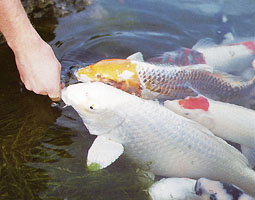 |
Koi can learn with a great enthusiasm to feed out of the keepers hand. Once they get use to you being close to them you can offer them some bread or koi cookies as a treat to bring them closer to you. Just dangle your hand in the water with the food offering. Be patient, usually one brave koi will make its way towards you and take the treat out of your hand. The others will catch on to the routine and you will have your koi swarming to your hand for that special treat in no time. They can also learn the affection of a pat on the head or a rub on the belly. Take it slow and let them come to you.